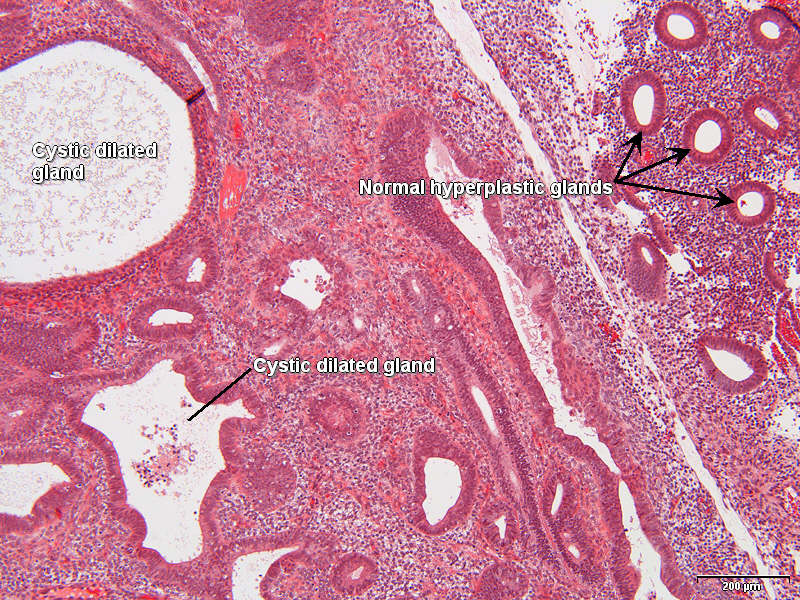
Question 1: What is the diagnosis?
- Endometruin with simple hyperplasia without atypia and with metaplasia (the metaplasia is not diplayed in the image to the left, so if you didn't think of that it doesn't matter).
In simple hyperplasia without atypia (this section), there is proliferation of cells, but the basic structure of the endometrium is relatively unchanged. This is considered to be the least dangerous type of hyperplasia. Other terms that are approximately the same as simple hyperplasia are mild, cystic, or Swiss-cheese hyperplasia.
Question 2: What other disorders can cause these kind of changes to the endometrium?
- anovalatory cycles, obesity, diabetes mellitus type II, hypertention and granulosacell tumor. The take home message is that the gland is under influence by estrogen over longer periods of time and gets hyperplastic. |